Thanks for requesting a Free IT Health Check
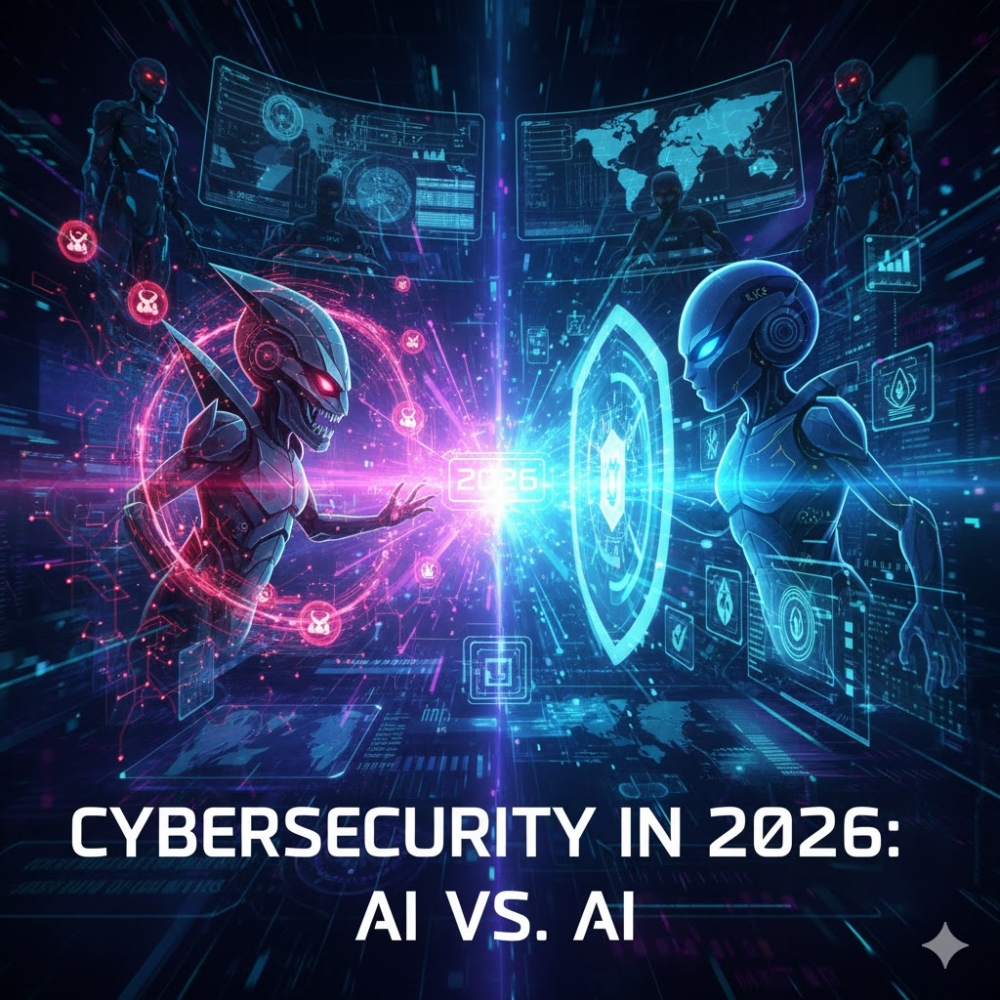
One of our team will contact you directly to make the necessary arrangements to get the process started. If you need to speak to us in the meantime feel free to give us a call on 01794 830326.Cybersecurity in 2026: AI vs AI
Cybersecurity in 2026 isn’t just about firewalls and antivirus any more - it’s about smart defence in an AI-powered world. As attackers and defenders alike adopt advanced technologies, the threat landscape is changing fast and unpredictably.
1. AI-driven attacks are the dominant risk
Artificial intelligence is reshaping not just how systems are built - but how they are attacked.
- Attackers now use AI to automate reconnaissance, generate phishing messages, and craft deepfake content that is harder to spot and more convincing than ever before.
- Sophisticated AI bots can blend into normal activity, bypassing traditional detection systems vulnerabilities.
- Emerging threats include agentic AI malware - autonomous systems that find and adapt attack patterns without human oversight.
What you should do:
Implement layered security with AI-powered monitoring, train teams to recognise AI-enhanced fraud, and enforce strict access governance.
2. Social engineering and deepfakes strike harder
Gone are the days when phishing was easily recognisable.
- AI enables attackers to craft highly personalised emails, calls, and messages using information gathered from social media, electoral register, and other publicly available databases - convincingly impersonating trusted contacts.
- Deepfakes - realistic fake videos or voice clips - are being used to deceive employees and executives.
Tip:
Always pause and verify externally if a request seems urgent or unusual, even if it looks legitimate.
3. Internet of Things (IoT) devices are easy targets
Not just phones and laptops - everyday devices like smart TVs, routers, thermostats, and even coffee machines can be breach points.
- Millions of devices with poor security are being hijacked into botnets or used to infiltrate home and office networks.
What to change:
Replace default passwords, keep device software updated, and only buy products with clear security support.
4. Real-world breaches and systemic risks
Cyber-attacks are no longer theoretical - they are happening now.
- The European Commission experienced a breach of its mobile management system, exposing staff contact details.
- Critical infrastructure and enterprise supply chains are under constant threat, especially from sophisticated nation-state or organised groups.
Lesson: Anyone managing data, infrastructure, or user access - from small firms to government bodies - must assume they are a potential target.
5. Identity and access are the new “Perimeter”
Traditional network perimeters are disappearing.
- Identity credentials and access tokens are often the weak link - attackers go after people, not just machines.
- Multiple breaches start with stolen or reused passwords, or compromised authentication systems.
Best practice:
Use multi-factor authentication, strong password policies, privileged access monitoring, and zero-trust principles across the board.
6. Ransomware and fraud still rampant
Despite new tech, old-school crime persists:
- Ransomware continues to cost millions and disrupt services.
- Cyber-enabled fraud, fuelled by AI and social engineering, is becoming a top concern for CEOs and executives.
Protect yourself:
Regular backups, segmentation of data, and fraud monitoring tools are essential.
7. Regulation and governance are catching up
More laws and guidelines are emerging globally to make organisations more accountable.
- Regulatory frameworks worldwide are tightening, and more companies are increasing cybersecurity budget and staffing.
- Boards and executives are increasingly held liable for compliance failures.
Advice:
Build compliance into your security strategy early - it’s cheaper and safer than reacting after a breach.
Closing thought
The cybersecurity landscape in 2026 is dynamic, complex, and increasingly automated. Attackers are weaponising the same technologies that are transforming our lives. But informed organisations and individuals - by understanding trends like AI-driven attacks, social engineering, identity risks, and IoT vulnerabilities - can stay ahead of the curve.
Book a free IT health check today
If you're unsure of your IT requirements, or how to upgrade your existing system, book in for a free IT health check. We'll assess all of your systems and plans and come up with a solution for your individual IT needs.